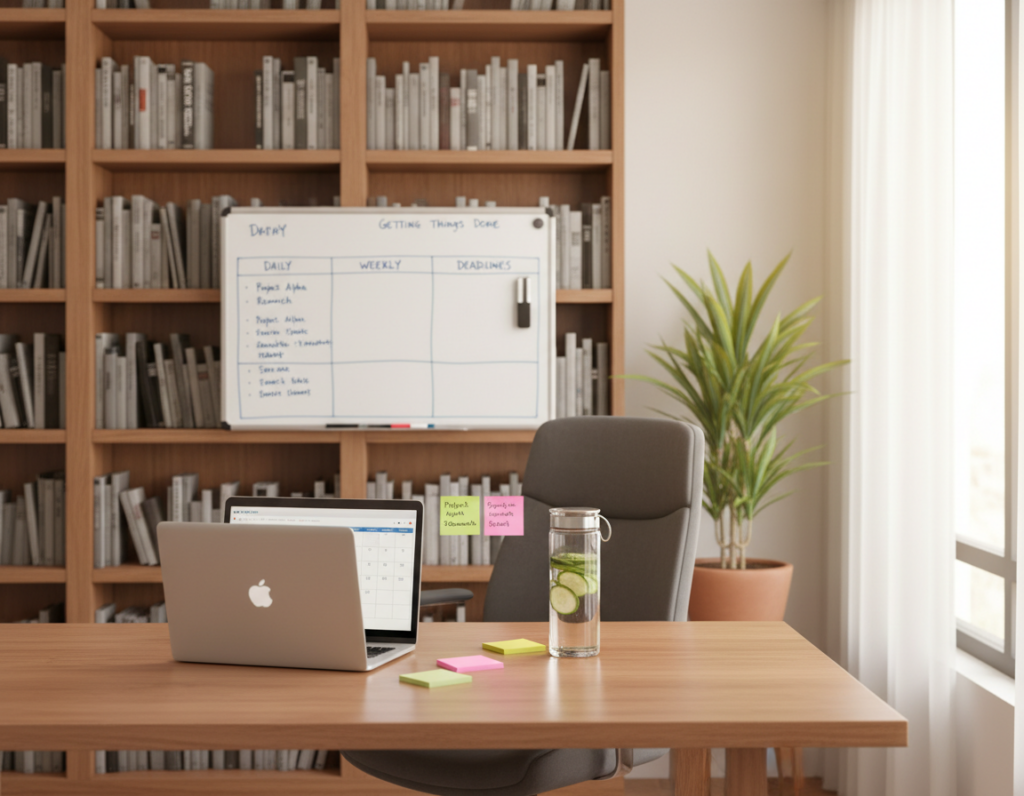
Modern work demands clear concentration to meet goals and deadlines. Many employees struggle to keep attention through the day. Simple routines can protect energy and boost quality of output.
Teams that use tools like Trello or Asana tame tasks and timelines. The Pomodoro technique gives a practical framework for short sessions of focused work and planned breaks. This method helps maintain clarity while avoiding burnout.
Creating a dedicated workspace and steady habits matters. Time management that values recovery as much as effort improves job satisfaction and long-term project progress. Small changes to environment and routine lead to clearer attention, better results, and healthier work days.
The Science of Focus and Performance Workplace Productivity
Neuroscience shows that mental load shapes how much any team can achieve each day. Managing cognitive demand keeps attention steady and reduces errors. Small changes in routines yield measurable gains in clarity and task completion.
The Impact of Cognitive Load
Constant context switching drains the brain’s energy. When employees juggle many tasks, reaction time slows and quality drops. Limiting multitasking and prioritizing one task at a time preserves resources.
Why Mental Performance Matters
Happier employees produce more. A study by Oswald, Proto, and Sgroi (2015) found roughly a 13% boost in productivity for happier staff.
- Structured time management and brief breaks protect neurotransmitter balance.
- Tools like digital calendars reduce distractions and improve workflow.
- Mindfulness practice and consistent environment improve concentration and job satisfaction.
“Happier employees demonstrate increased output in controlled experiments.”
Practical approach: limit multitasking, set clear goals, and use simple tools to guard energy. These ways help teams meet deadlines and sustain long-term progress.
Designing a Distraction-Free Workspace
A well-designed desk area can signal the brain that it is time to handle serious tasks.
Choose a dedicated workspace away from high-traffic zones. A quiet corner or an underused room helps employees train their minds to link that spot with work and clear goals.
Clear the desk. Keep only essential tools and one task list in reach to reduce distractions during the day. This simple habit boosts clarity and efficiency.
Use noise-canceling headphones or gentle soundscapes to block background noise. Add a short ritual, such as two minutes of deep breathing, to mark the start of focused work sessions.
- Bright, natural lighting and a comfortable chair improve mental clarity and job satisfaction.
- Regular breaks and sound management help sustain energy and meet deadlines without stress.
- Effective time management inside a clean zone raises the quality of project work and overall workflow.
Small changes in layout and routine often deliver big gains in concentration, motivation, and long-term results.
Mastering Time Management Techniques
Simple timing systems help people carve reliable hours for high-value tasks. These methods reduce overload and give a clear way to move from intent to action.
The Pomodoro Technique
The Pomodoro technique sets a timer for 25 minutes of intense work followed by a 5-minute break. This rhythm helps employees stay focused and avoid burnout.
Short sessions make it easier to tackle a single task and return with fresh attention after each break.
Time Blocking Strategies
Time blocking assigns hours of the day to specific tasks or goals. Teams can reserve morning blocks for deep work and afternoons for meetings.
Breaking large projects into smaller tasks keeps the workflow steady and lowers overwhelm.
Managing Deep Work Sessions
Protect deep work by silencing non-essential notifications and closing email. Create an environment that minimizes distractions.
- Set clear session goals before the timer starts.
- Review progress at the end of each block to keep clarity.
- Use brief breaks to restore energy and motivation.
Research by Häfner, Stock, and Oberst shows structured time training improves performance and reduces strain. Effective time management is a practical way to raise quality of output each day.
Prioritizing Tasks for Maximum Efficiency
Sorting tasks by impact and urgency helps teams spend time on what truly moves goals forward.
The Eisenhower Matrix divides work into four quadrants: important and urgent, important but not urgent, urgent but not important, and neither.
Using this grid lets employees allocate energy where it matters most. Tools like Trello or Asana make lists, set deadlines, and track progress on key projects.
When a team pairs the matrix with clear time management rules, last-minute rushes fall, and stress drops. Setting simple goals for each session helps staff stay focused on primary objectives.
- Rank tasks by impact, then set deadlines for the top items.
- Use Trello or Asana to move cards through stages and keep goals visible.
- Review lists each day to keep clarity and adjust for changing priorities.
- Schedule short breaks to protect energy and return refreshed to the next task.
Clear prioritization ensures that daily efforts align with company goals and boost overall performance while keeping employees organized and calm.
The Role of Physical Health in Cognitive Function
Regular micro-breaks that include activity help sustain mental energy through demanding tasks. Physical habits affect how the brain handles stress, memory, and decision making. Simple routines support clearer thinking and better results for the whole team.
The Benefits of Active Breaks
Short, active pauses reset attention. Taking a 5-10 minute break every hour lets employees move, breathe, and rehydrate. This small change reduces mental strain and helps people return ready to tackle the next task.
Movement boosts circulation and clears distractions. Remote staff miss natural office interruptions, so scheduled breaks act as a vital reset. Climbing stairs, walking the block, or a few stretches sharpens cognitive function for the rest of the day.
- Short breaks improve overall productivity and help manage time between sessions.
- Hydration and sufficient sleep support the cognitive health needed to meet goals.
- Encouraging active breaks builds a culture where performance links to physical health.
Leveraging Technology to Reduce Mental Load
Smart automation frees mental space so teams can solve harder problems.
Automation tools take on reminders, scheduling, reporting, and routine communication. This lets employees save time for strategic tasks.
Digital task managers and calendar apps help people plan the day clearly. When routine items move to software, the team can stay focused on key goals.
- Automation offloads repetitive tasks like scheduling and reporting to preserve energy for strategic work.
- Collaboration platforms such as Slack or Google Drive cut communication friction across the workplace.
- Targeted nutritional support, including Bacopa monnieri and Rhodiola rosea, may complement smart habits for memory and stress resilience.
When technology is used on purpose, it acts as a support system. Employees then protect mental clarity, reduce interruptions, and reach better results by the end of the day.
Setting Clear Goals for Professional Growth
Clear targets help staff turn broad aims into daily steps they can follow. Using the SMART framework makes goals Specific, Measurable, Achievable, Relevant, and Time-bound. This structure gives employees a clear roadmap for professional growth and regular work.
Break large company aims into small milestones. That lets each person own a piece of the plan and stay focused on the next action. Short wins boost morale and raise long-term productivity for the whole team.
Well-defined goals also act as objective benchmarks. When staff know what success looks like, they manage time better and avoid wasted effort. Clear goals reduce decision fatigue and help maintain steady performance through the day.
- Set one measurable target each week to guide daily tasks.
- Review goals monthly to keep them aligned with company needs.
- Celebrate milestones to reinforce ownership and ongoing improvement.
Cultivating a Culture of Accountability
When each person owns outcomes, the team moves from reactive habits to steady progress. This clarity makes roles simple to follow and reduces overlap in day-to-day work.
Managers build accountability by holding regular check-ins and offering clear, constructive feedback. Short meetings that set priorities help employees align tasks with larger goals.
Accountability is not about blame. It creates a supportive environment where people learn, improve, and take charge of their projects.
- Set clear expectations so every employee knows what success looks like.
- Encourage self-assessment to boost personal growth and long-term productivity.
- Use regular reviews to keep time use efficient and reduce the need for constant oversight.
“When responsibility is shared, teams deliver with greater consistency.”
Leaders can learn practical tips for fostering this culture by reading about fostering accountability. With clear ownership, employees manage tasks with confidence while the entire workplace benefits.
Encouraging Team Collaboration and Communication
Simple rituals for status updates keep work aligned across roles and time zones.
Clear communication prevents duplicated effort and ensures every employee works toward the same productivity goals.
Google’s Project Aristotle found that psychological safety is the strongest predictor of a high-performing team.
“Psychological safety is a key predictor of effective team performance.”
Providing tools such as team messaging apps and shared project platforms cuts the time spent on admin tasks. This helps employees focus on high-value work and deliver better results.
- Regular check-ins reduce confusion and keep tasks moving forward.
- Cross-department collaboration sparks creative solutions that benefit the whole organization.
- Open dialogue lets members feel heard, increasing willingness to share ideas.
Leaders who prioritize a culture of honest feedback and safe discussion improve team cohesion. That culture helps the organization meet demands of modern work with more clarity and less friction.
Implementing Continuous Feedback Loops
Continuous feedback keeps small course corrections possible, so teams adapt faster than with annual reviews.
Real-time feedback lets employees make adjustments to their work as issues arise. This reduces delay and helps teams finish tasks with fewer errors.
Constructive comments should be specific and actionable. Clear steps guide staff to improve skills and raise overall productivity.
Regular check-ins strengthen relations between managers and employees. Short meetings make it easier to address challenges and celebrate wins as they happen.
- Make feedback timely and tied to a single task.
- Coach with examples and a simple next step.
- Track progress so everyone knows where they stand over time.
“When feedback is routine, learning becomes part of daily work.”
A growth-focused culture encourages people to learn from experience rather than fear criticism. That mindset helps teams manage their time better and stay focused on steady improvement.
Promoting Sustainable Work-Life Balance
A steady boundary between job time and personal life prevents burnout and keeps teams engaged. When organizations protect rest, staff return with more energy and clearer judgement.
Offering flexible hours and remote options gives people control over their daily schedule. This autonomy helps them manage time and keep their attention on high-priority tasks.
Encouraging the use of breaks and paid time off ensures employees recharge. Short pauses and longer vacations both reduce stress and boost on-the-job output.
Wellness programs and occasional mental health days show that a company values its team. These benefits raise job satisfaction and cut turnover over the long term.
- Leaders who model healthy hours set a clear example: success is about working smarter, not nonstop effort.
- Supporting rest and recovery preserves cognitive clarity needed to stay focused on complex projects.
- Prioritizing wellbeing builds a culture where employees feel supported and capable of steady results.
“Sustainable habits are the foundation of lasting efficiency.”
Conclusion
When leaders pair clear goals with genuine support, steady progress becomes the norm.
Improving results requires work at two levels: personal habits and company culture. Clear goals, the right tools, and brief, scheduled breaks help people stay sharp.
Accountability and routine feedback keep everyone aligned and motivated. These practices let a team correct course fast and keep momentum.
Ultimately, lasting gains come when employees feel valued, rested, and empowered to manage their own hours. That mix supports higher quality output, better morale, and steady long-term growth.