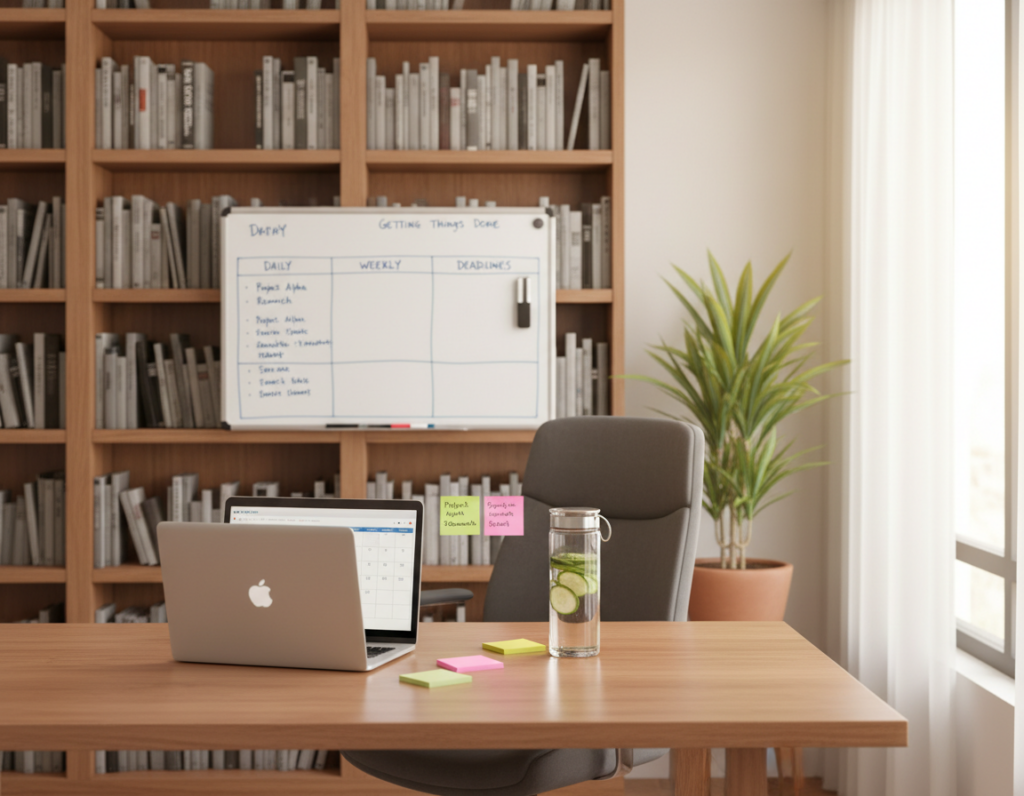
Consistent success starts with a manageable routine. Professionals who want steady results focus on small, repeatable steps that protect energy and sharpen focus. The Bureau of Labor Statistics notes that many jobs now allow remote work, giving people more control over time and how they shape the day.
True productivity is not about doing more things. It is about applying effort to tasks that matter and aligning short-term goals with long-term success. By crafting a consistent morning routine, a professional can set tone and reduce decision fatigue.
Successful people build routines that support deep work and clear priorities. They use simple tools—time blocks, task lists, and pause points—to protect focus and avoid burnout. For practical tips on forming productive routines, see productive routines.
The Science Behind Daily Productivity Habits Performance
Routines act like software updates for the brain, streamlining decisions and freeing attention. Research shows that stable patterns help the brain allot resources more efficiently. That allows people to save energy for complex tasks.
Cognitive Benefits of Routine
The human brain prefers predictability. When basic tasks become automatic, the mind can handle harder work without extra strain.
Establishing a consistent morning routine primes body and brain so people start the day with more focus and clearer goals.
The Role of Automation
Automation reduces small decisions and clears time. The BLS notes that 37% of jobs can be done from home, which changes how people plan their schedules.
- The APA finds that habits automate simple actions and save mental energy.
- Regular exercise and a balanced breakfast help the brain and body perform better during work hours.
- By automating repetitive tasks, professionals free minutes and hours for the things that drive long-term success.
“Good routines make complex work more manageable.”
Establishing a Morning Routine for Mental Clarity
A brief self-check before work clarifies what the brain and body need to handle the day. Yale research links emotional awareness to better decision-making and resilience, which explains why many high performers begin with a short check-in.
Instead of a rigid script, they align intention with energy. This means asking one simple question: what will help me focus my time and attention right now?
A concise list of priorities helps people start day with clarity. Limit that list to two or three tasks to avoid overwhelm and keep the brain fresh for important work.
Keeping routines simple reduces decision fatigue. When routine steps become automatic, people save mental energy for complex tasks and improve long-term performance.
“Emotional awareness at the start of the day boosts resilience and clear choices.”
- Ask what the body and mind need.
- Create a short priority list for the first work block.
- Use the early morning to set time limits and protect focus.
Mastering Time Management Through Single-Tasking
Concentrated work windows help people move complex projects forward with less mental friction. Single-tasking reduces context switching so attention stays on one important task. This approach turns vague lists into clear blocks of real work.
Techniques for Deep Work
The Pomodoro Technique originated in the 1980s by Francesco Cirillo. He proposed 25-minute intervals followed by short breaks to sustain energy and attention.
People should block specific hours for deep work and guard that time. Research shows fragmented attention lowers efficiency, so focus on one thing at a time.
- Use a timer for 25 minutes to protect minutes of high focus.
- Turn a to-do list into a short set of tasks and rank important tasks first.
- Dedicate morning or afternoon blocks to the hardest work to match energy and goals.
“When attention is steady, work quality improves and time is used with intent.”
Strategies to Minimize Workplace Distractions
Minimizing interruptions lets people keep steady attention on meaningful work. Small changes to a routine free time and preserve energy for priority tasks.
Start by silencing notifications on email and social media apps that constantly pull attention away from deep work. Turning devices to Do Not Disturb for scheduled blocks keeps interruptions low.
Short breaks can help. The American Psychological Association notes that brief pauses after about 15 minutes of focused work help maintain attention for longer periods. Those minutes of rest refresh the mind without derailing progress.
- Block clear hours in the schedule for uninterrupted work and protect that time.
- Bundle similar tasks into one session to reduce the mental cost of switching.
- Put the phone away or move to a quieter location to protect the morning routine and key work blocks.
Set firm boundaries between work and home media. Simple habits—like setting Slack to DND or closing email during deep work—sustain performance across the day.
“Fewer interruptions are key to effective focus,” — American Psychological Association
For tips on how distractions erode focus and time, see the hidden productivity drain.
Prioritizing Tasks with the Eisenhower Matrix
The Eisenhower Matrix helps teams decide what truly deserves time and what can wait. It divides work into four quadrants by urgency and importance. This visual method makes a long task list easier to manage.
McKinsey research shows top professionals win by focusing on the right priorities, not by doing more. Using the matrix, they place important tasks in the top-left quadrant and reserve morning routine hours for deep work.
When a task is urgent but not important, the matrix suggests delegation. If it is neither urgent nor important, removal saves time and energy for meaningful goals.
- Categorize each item on the to-do list into one quadrant.
- Block your best hours for top-left tasks that drive success.
- Delegate or delete items that drain time without value.
“Focus on fewer things that matter; the rest can wait.”
Optimizing Your Schedule Based on Circadian Rhythms
Aligning work blocks with natural energy windows helps people get more done with less strain. Understanding whether someone is an early bird or a night owl guides how they place important tasks and email around the day.
Early Bird Schedules
Early risers often find their best focus in the morning, so they should block deep work in the first hours after waking. A short bout of exercise—just 20 minutes—can prime the brain for peak creativity and focus, according to University of Illinois research.
Night Owl Schedules
Night owls may reach their peak attention later in the day. They can reserve late afternoon or evening hours for complex tasks and use the morning for low-effort email and planning. Writing a concise to‑do list before sleep helps them manage time the next day.
- Block your highest-value task when energy is highest.
- Use 20 minutes of exercise to boost brain function regardless of schedule.
- Match email and deep work to natural peaks to reduce distractions.
“Knowing when your brain is at its peak makes time management simpler.”
The Importance of Physical and Mental Recovery
Rest and restoration shape how well someone uses time and attention across the workweek. Quality sleep is the foundation: the American Academy of Sleep Medicine finds sleep quality can affect cognitive function by up to 33%. Protecting the brain and body at night supports clear thinking the next day.
Establishing a consistent wind-down routine helps the brain prepare for deep sleep. A short ritual—light reading, dimming lights, and avoiding screens—signals the body to slow down. Those small steps preserve energy for focused hours.
After work, low-stress hobbies offer meaningful rest. Shifting attention away from tasks reduces mental load and keeps motivation steady. Avoid heavy meals and cut caffeine several hours before bed to improve nightly rest.
- Quality sleep supports cognitive recovery and sharper decision-making.
- Wind-down routines make sleep onset easier and protect limited time for rest.
- Active recovery—hobbies and short breaks—prepares people to return to tasks refreshed.
“By protecting your sleep, you ensure the brain and body are fully recharged.”
Leveraging Technology to Support Your Workflow
Technology can be tuned to support goals instead of stealing minutes from the workday. When chosen with intent, apps help people protect attention, track time, and keep energy for important tasks.
Gamification apps make small wins visible. Habitica turns chores and work tasks into challenges that boost motivation and help sustain a routine.
Time Tracking Solutions
Tools like Hubstaff provide analytics that show where hours go and which tasks drain focus. Those insights guide smarter scheduling and better time management.
Focus Tools
Apps such as Forest block social media and reward minutes of uninterrupted work. They reduce distractions during a deep work block and support a clear morning or evening schedule.
- Use reminders to cue a morning routine so energy aligns with your best hours.
- Manage email with set check times to limit interruptive alerts.
- Choose tools that serve your routines, not the other way around.
“Technology should be a part of your workflow that supports your habits, not a source of distraction.”
Conclusion
Simple structure around work blocks helps people protect mental energy and creativity.
Building strong habits is a continuous process that supports long-term success. Consistent actions let someone manage time and task load with greater ease.
Keep a simple list of priorities to guide each work block and to reduce decision friction. This small step improves management of time and attention.
Adapt routines as goals change. With steady effort, routines lead to peak focus and less mental exhaustion over time.
Investing in these approaches today yields sustained success tomorrow.